

Level 3
Unsupervised to 40 metres, and to 60 with a dive manager — the top of the French training pathway.
How the course runs
Allow 10 dives, theory included.
-
Before you come
Medical certificate, Level 2 or PA 40.
-
Running a dive with no dive manager
This is what really sets Level 3 apart. Choosing the site from the weather, wind, current and topography, checking the boat complies, writing the safety sheet, flying the alpha flag, checking the oxygen and the means of raising the alarm.
-
Planning in the forty-metre zone
Taking the instructions on board, anticipating stops, accounting for each buddy's different computer before entering the water, and agreeing how gauges will be checked — and how you will surface, routinely or after an incident.
-
Deep autonomous diving
Navigating varied routes by relief, light, current and instrument. Watching your buddies, adapting to the unexpected, holding the team together. Signalling mid-water stops with a delayed surface marker buoy.
-
Rescue at forty metres
The same scenarios as Level 2, but in a zone that forgives nothing: fast reading of the situation, controlled ascent, marked stop, secure exit. Good physical condition is part of safety here, not comfort.
-
Down to sixty
PE 60 opens the forty-to-sixty-metre zone, supervised by an E4 instructor. You go there progressively: buoyancy, air consumption, narcosis — everything changes scale.
-
Theory
Decompression models and gradient factors, the rules governing depth zones and responsibility, decompression sickness in detail, knowledge of the environment and its hazards. Orally, in writing, or in context.
What is included
Not included
- Tips for instructors and guides, entirely up to you
What to bring
- A Level 2 certification or equivalent
- 20 autonomous dives within the 20-metre zone
- 20 supervised dives in the deeper zone, down to 40 metres
- A medical certificate less than a year old
- Swimwear and a towel
- Parental consent for minors
Choose your experience
Similar options, compared line by line. Yours to choose.
Level 1
from 515 €
Level 2
from 750 €
Level 3
from 750 €
The highest level of independent diver
Niveau 3 is the highest autonomous diver certification. It carries the PA 60 aptitude: diving unsupervised to forty metres with no dive manager, and to sixty metres when a dive manager is present and authorises it. It is the level that makes you genuinely self-reliant: you plan your dives, you decide the profile, you take responsibility for your team’s safety.
What the course covers
Decompression and planning, managing independence, leading a team, dealing with a buddy in difficulty at depth, and theory that goes considerably further than at the previous levels.
What you need first
Niveau 2 or an international equivalent, enough experience dives, and genuine ease at forty metres. This is not a level you take straight after the last one.
Where you are, and what comes next
The French pathway, organised in levels set by the French sports code. No licence needed.
Already behind you Level 1 · Level 2
-
Full autonomy
Level 3
Unsupervised to 40 metres with no dive manager, and to 60 metres when a dive manager is present.
750 € You are here -
What next?
The diver pathway ends here: beyond it lie supervision and teaching, which are another trade. A Niveau 3 is no longer working towards a certification — they pick their site, dive autonomously, and come back.
Frequently asked questions
From what age?
What level do I need first?
What does it actually change?
Is sixty metres automatic?
How many dives?
What if it rains?
I have a flight coming up — can I dive?
What not to do when you get out of the water
Your body takes several hours to get rid of the nitrogen it has absorbed. These waiting times are not comfort precautions: they prevent decompression sickness occurring on land, sometimes several hours after the dive.
-
Flying
12 h minimum
After a single no-stop dive. Allow 18 h if you made several dives in the day or dived several days in a row, and 24 h after a dive with decompression stops.
-
Going to altitude
Same waiting times
Above 300 metres, the effect is the same as on a plane. From Nice, the road to Peille, the Col de Turini or even the Moyenne Corniche quickly go above that height.
-
Freediving
Not the same day
Combining freediving and scuba on the same day carries a poorly understood risk of decompression sickness. If you want to do both, freedive first, or wait until the next day.
-
Hard exercise, sauna, steam room
4 to 6 h
Running, weight training, a very hot bath: anything that speeds up circulation or dilates blood vessels increases the risk just after a dive. A gentle swim is no problem at all.
If in doubt — an earlier flight, a connection, feeling unwell after the trip — call us. And if a symptom appears after a dive, call 15 (or 112) and say you have been diving: the right response is not the same.
What you can see underwater
Marine life varies with the season, the weather and the site chosen that morning. Here is what the Mediterranean off Nice most often has in store.
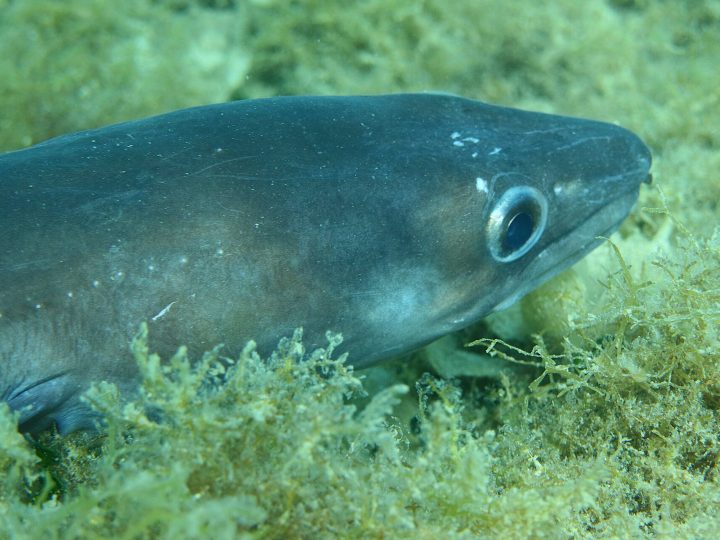
Conger eel
Crevices, boulders and wrecks, from 10 m
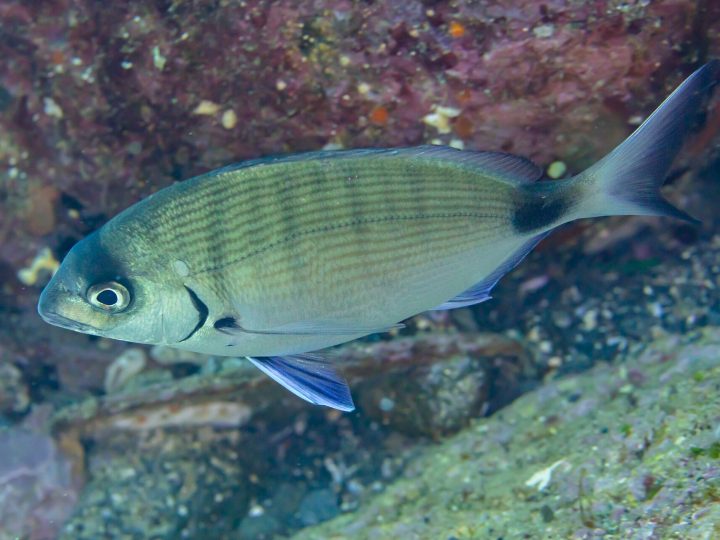
White seabream
Rocky ground, from the surface
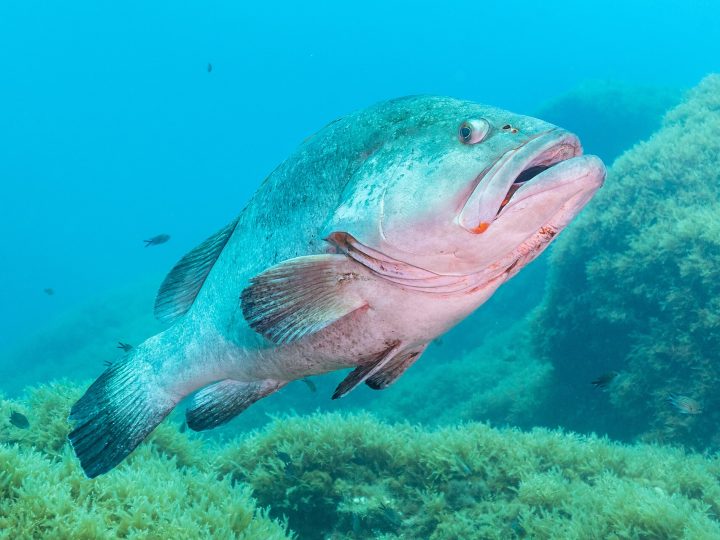
Dusky grouper
Rocky walls, from 15 m
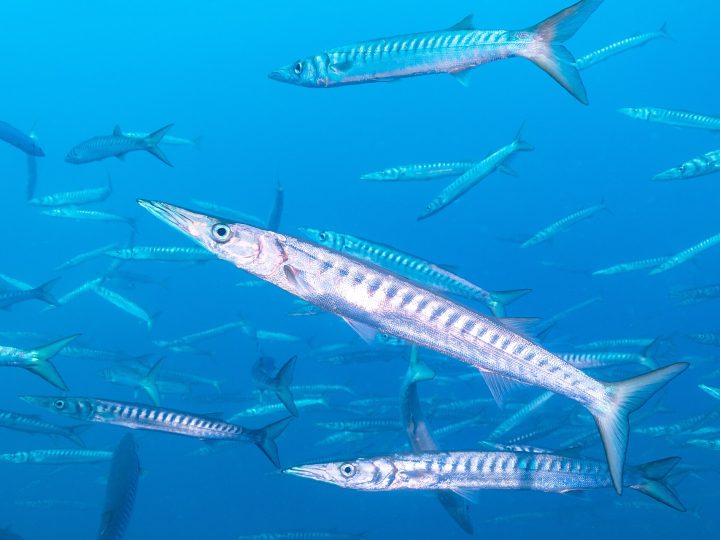
Barracuda
In open water, above the walls
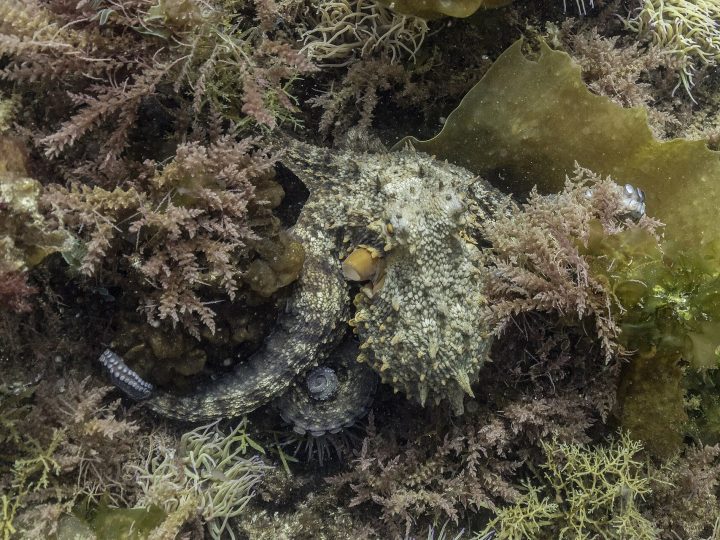
Common octopus
Rocky crevices, from 2 m
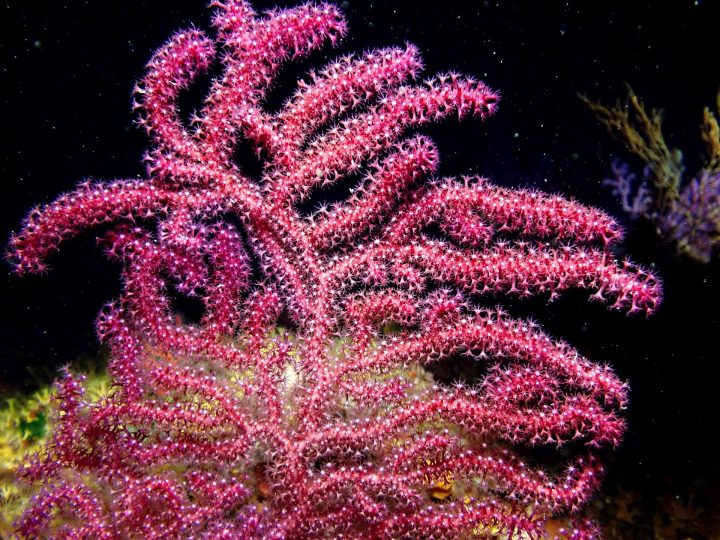
Red gorgonian
Walls, from 20 m
Photos: Holger Krisp · CC BY 3.0 · Wikimedia Commons ; Diego Delso · CC BY-SA 4.0 · Wikimedia Commons ; FredD · CC BY-SA 4.0 · Wikimedia Commons
The dive sites around Nice
From the bay of Villefranche-sur-Mer to the Mala cave, the site is chosen that morning according to the weather.

Cap de Nice
The closest area to the club: a run of walls that drop away fast, ten minutes from the…

Maeterlinck wall
A wall running out at right angles to the shore, beneath the villa that gives it its name:…
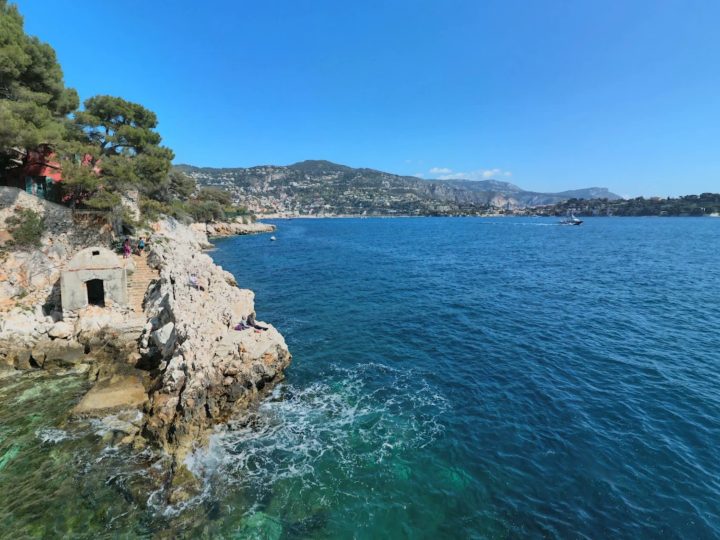
Bay of Villefranche — west side
The coral cave and the western points: the most complete dive in the bay, from the surface to…
Quai Lunel
The premises signed “Chango Diving”, in the port of Nice, next to Rent My Boat and the careening area.
- Address
- Quai Lunel
06300 Nice - Arrive
- 8.30am (30 min before departure)
Read before you come
Read up before your trip.

Your first try dive: what to expect
What actually happens, minute by minute, and the questions everyone has without daring to ask.
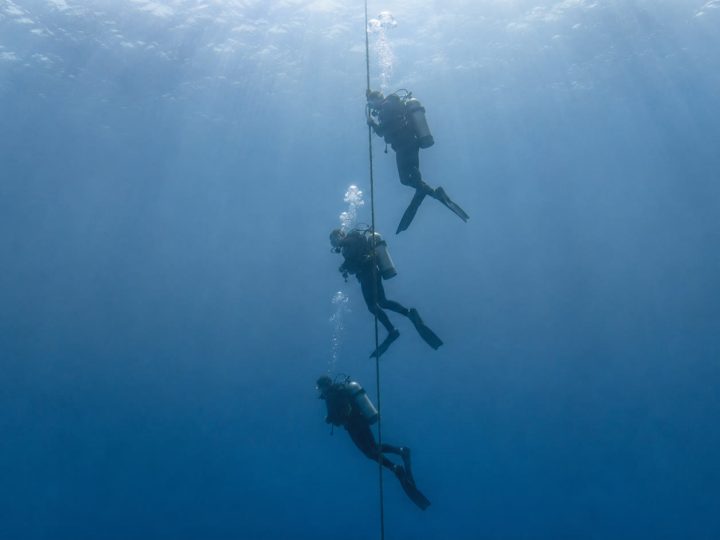
Open Water, Niveau 1, PADI, SSI: which certification to choose
Niveau 1 leads to sixty metres, Open Water to forty — and in France, the Code du sport does not recognise Open…
What diving in Nice really costs
From try dive to independence, what you actually pay — licence, medical certificate, certification card, equipment hire, and the point at which…
Pick your time slot
Pick the date that suits you. A question before booking? Message us on WhatsApp, we reply fast.
Buying it as a gift?
Get a feel for it
Life on board, the Mediterranean, first breaths underwater and moments shared.


