
Diver Stress & Rescue  SSI certification, recognised worldwide
Learning to spot stress in yourself and in others, to prevent an incident, and to act effectively if one happens. This is the course that changes how you dive the most.
- The course people most often tell us changed the way they dive
- Spotting stress before an incident, in yourself and in others
- Demanding without being difficult: no traps, everything is progressive
- Required for Master Diver
- Groups of 4 students maximum
- Dive computer on loan, at no extra cost
How does your Stress & Rescue course in Nice work?
The theory is done online, at your own pace, with the SSI digital kit, which you keep for life: how stress arises, how it shows in a diver, how to organise an assist. You arrive on Quai Lunel already knowing what you will practise.
We start with the basics, calmly: recovering your regulator, removing and replacing your scuba unit and weights, relieving a cramp, swimming without a mask, breathing from a free-flowing regulator. The same exercises as Open Water, but this time to learn to keep a cool head when they come one after another.
Then we move on to others: helping a diver in difficulty, towing a tired diver, ascending while sharing air, organising the search for a missing diver. Each scenario is prepared together before it is played out in the water.
The last dives at sea, from the boat, cover the most serious part: the unresponsive diver, underwater then at the surface, who has to be brought up, towed and taken out of the water. You work on discomfort, progressively and with no traps.
The reward is the SSI Diver Stress & Rescue card, and one of the requirements for Master Diver. To round it off on the first-aid side, React Right teaches first aid and oxygen administration.
- Cancellation up to 7 days before the course, course kit excluded
- Email confirmation with the details of your trip
- State-qualified instructor State-qualified instructors
- Limited group size maximum 4 participants
Diver Stress & Rescue SSI
A digital SSI certification, valid for life and recognised by dive centres worldwide. It lands in your personal account as soon as it is validated.
- Recognised in over 110 countries
- Digital version, always in your pocket
- No renewal fee, ever
Prevent, stay calm, come to the rescue
The SSI Diver Stress & Rescue programme, as it is assessed: online theory and a final exam, skill sessions, then the dives at sea.
-
01
Prepare the dive
Briefing and planning: most incidents are avoided before you get in the water.
-
02
Stay in control of your gear
Recover your regulator with the arm sweep and another method, remove and replace your scuba unit and weights at the surface and underwater, disconnect and reconnect the inflator hose.
-
03
Manage your own stress
Relieve a cramp, swim without a mask, breathe from a free-flowing regulator, emergency swimming and buoyant ascents.
-
04
Help a responsive diver
Stationary air sharing then air-sharing ascent, assisting a diver, towing a tired diver, rescue.
-
05
Find a missing diver
Organise the search methodically, rather than looking at random.
-
06
The unresponsive diver
Underwater then at the surface: bringing them up, towing them and getting them out of the water.
-
07
After the dive
Equipment care, the debrief and the logbook.
How the course runs
Allow 6 dives, theory included.
-
Theory online
At your own pace, before you come, with the SSI digital kit.
-
Basic skills
Calm exercises, until they come without thinking.
-
Scenarios at sea
Assists, searches, unresponsive diver: from the boat, in real conditions.
-
Certification
The final exam, then your SSI Diver Stress & Rescue card.
What is included
Included in the price
- Guiding by a state-qualified instructor
- The loan of a dive computer
- Full equipment, fitted to your size
- The boat trip from the Port of Nice
- The centre's third-party liability insurance
Not included
- Travel to the Port of Nice
- Underwater photos and videos
- Food and drinks
- Cancellation insurance
- Tips for instructors and guides, entirely up to you
What to bring
- Swimsuit and towel
- Reef-safe sunscreen
- A windbreaker for the boat ride
- Something to drink
- Parental consent for minors
Choose your experience
Similar options, compared line by line. Yours to choose.
Scuba Diver SSI
from 360 €
Open Water Diver SSI
from 650 €
Advanced Open Water
from 490 €
Stress before the accident
Almost no diving incident happens all at once. It starts with a detail: a badly adjusted fin, a leaking mask, a buddy drifting away. Stress rises, breathing speeds up, air goes faster — and the situation closes in.
This course teaches you to recognise that beginning. In yourself first, which is harder than it sounds, and then in others.
What you do in the water
You simulate situations: a diver panicking at the surface, another who stops responding, an ascent to manage. These are the only dives in the SSI pathway where you work on discomfort. Progressively, with no traps, but without pretending either.
Why it changes how you dive
It is the one people talk to us about longest afterwards. Not because you use it often — thankfully — but because it changes your attention: you watch your buddy differently, you anticipate, and you call off a dive that looks wrong more readily.
Do you need to be tough?
Physically, no: it is not a test of strength and the exercises are designed to be achievable. What you need is around twenty dives behind you, so you are not managing your own buoyancy at the same time as somebody else’s.
Where you are, and what comes next
The SSI training pathway, in five steps: start, dive, rescue, guide, then teach. The specialties and dives you log along the way also earn you recognition levels.
Already behind you Scuba Diver · Open Water Diver · Advanced Open Water Diver
-
Step 3 · Rescue
Diver Stress & Rescue
Recognise stress, prevent incidents, carry out rescues. It goes with React Right — first aid, oxygen, defibrillator —, required for Divemaster.
480 € You are here -
Step 4 · Guide
Divemaster
The first professional level: guide certified divers and assist on courses.
1,200 € Discover → -
Step 5 · Teach
After Divemaster comes Open Water Instructor, then specialty instructor ratings: the last step, the one that turns a passion into a profession.
Frequently asked questions
What level do I need?
Is it a difficult course?
What do you really learn?
Do I need to be a strong swimmer?
Is it required for Master Diver?
Do many divers find it useful?
What if it rains?
I am flying soon, can I dive?
What not to do when you get out of the water
Your body takes several hours to get rid of the nitrogen it has absorbed. These waiting times are not comfort precautions: they prevent decompression sickness occurring on land, sometimes several hours after the dive.
-
Flying
12 h minimum
After a single no-stop dive. Allow 18 h if you made several dives in the day or dived several days in a row, and 24 h after a dive with decompression stops.
-
Going to altitude
Same waiting times
Above 300 metres, the effect is the same as on a plane. From Nice, the road to Peille, the Col de Turini or even the Moyenne Corniche quickly go above that height.
-
Freediving
Not the same day
Combining freediving and scuba on the same day carries a poorly understood risk of decompression sickness. If you want to do both, freedive first, or wait until the next day.
-
Hard exercise, sauna, steam room
4 to 6 h
Running, weight training, a very hot bath: anything that speeds up circulation or dilates blood vessels increases the risk just after a dive. A gentle swim is no problem at all.
If in doubt — an earlier flight, a connection, feeling unwell after the trip — call us. And if a symptom appears after a dive, call 15 (or 112) and say you have been diving: the right response is not the same.
What you can see underwater
Marine life varies with the season, the weather and the site chosen that morning. Here is what the Mediterranean off Nice most often has in store.
Conger eel
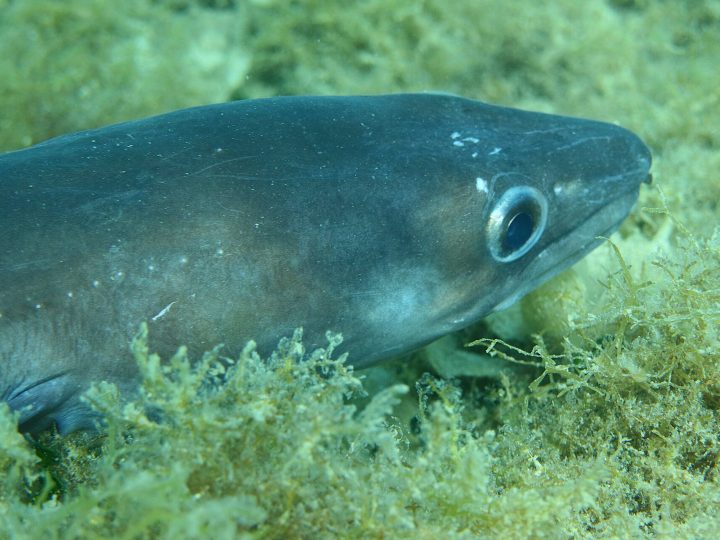
Crevices, boulders and wrecks, from 10 m
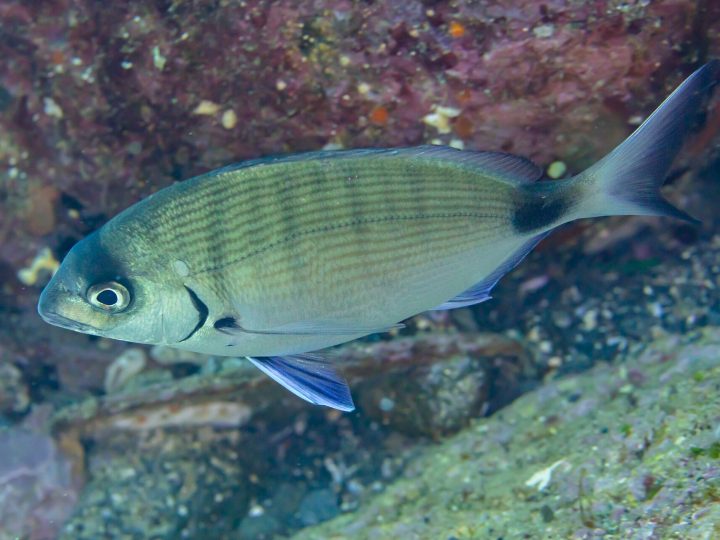
White seabream
Rocky ground, from the surface
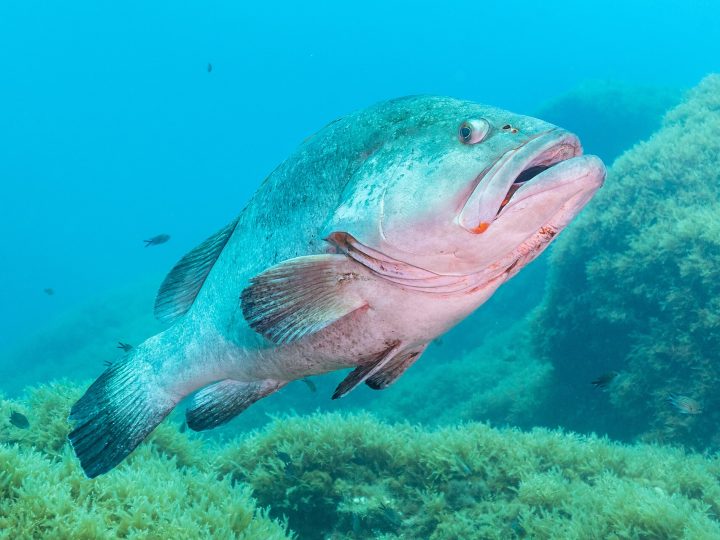
Dusky grouper
Rocky walls, from 15 m
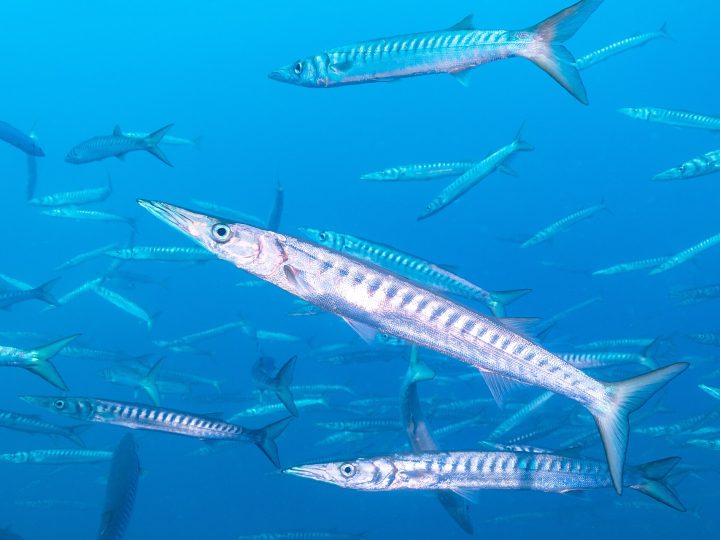
Barracuda
In open water, above the walls
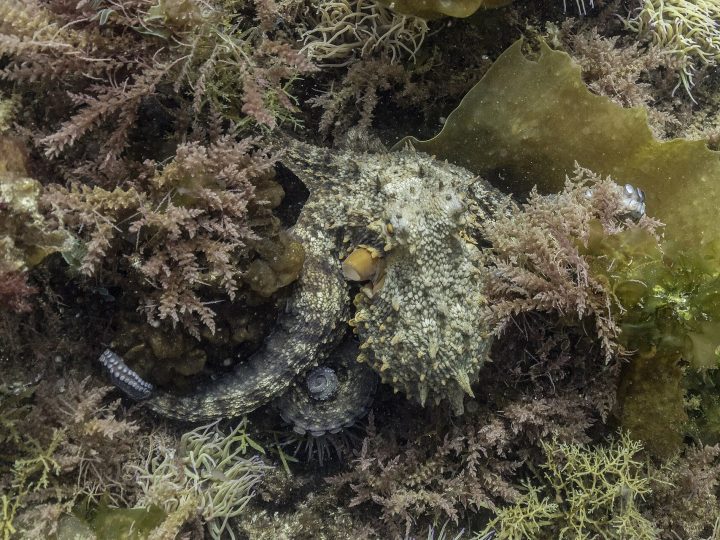
Common octopus
Rocky crevices, from 2 m
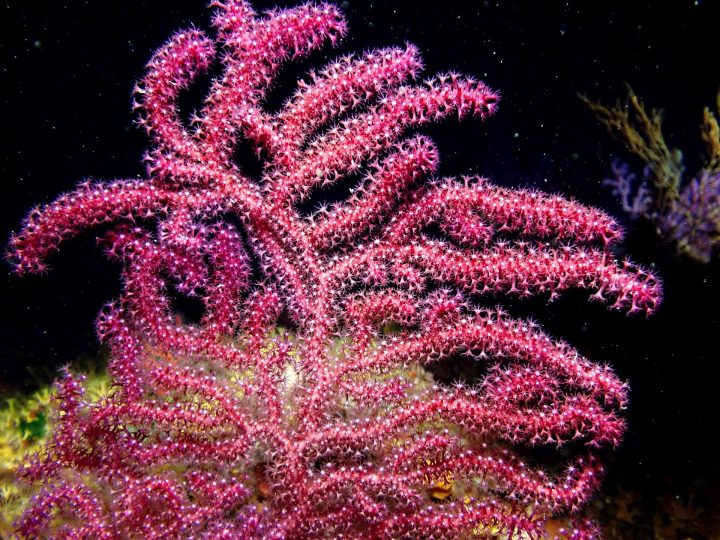
Red gorgonian
Walls, from 20 m
Photos: Holger Krisp · CC BY 3.0 · Wikimedia Commons ; Diego Delso · CC BY-SA 4.0 · Wikimedia Commons ; FredD · CC BY-SA 4.0 · Wikimedia Commons
The dive sites around Nice
From the bay of Villefranche-sur-Mer to the Mala cave, the site is chosen that morning according to the weather.

Cap de Nice
The closest area to the club: a run of walls that drop away fast, ten minutes from the…

Maeterlinck wall
A wall running out at right angles to the shore, beneath the villa that gives it its name:…
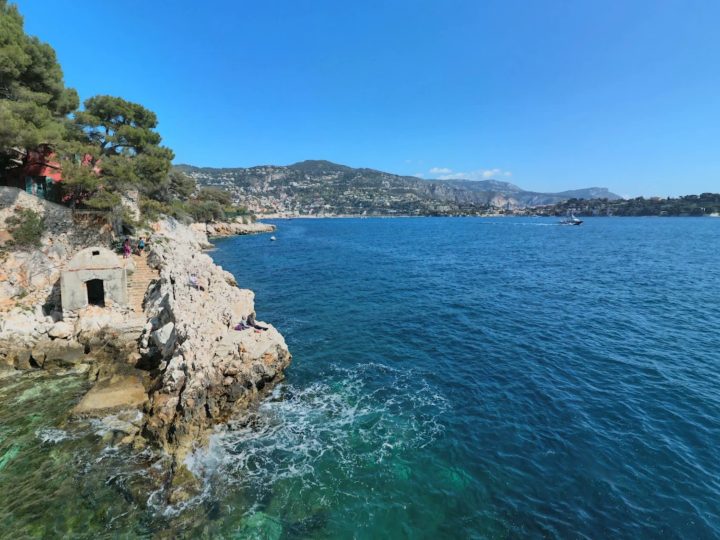
Bay of Villefranche — west side
The coral cave and the western points: the most complete dive in the bay, from the surface to…
Quai Lunel
The premises signed “Chango Diving”, in the port of Nice, next to Rent My Boat and the careening area.
- Address
- Quai Lunel
06300 Nice - Arrive
- 8.30am (30 min before departure)
Read before you come
Read up before your trip.

Your first try dive: what to expect
What actually happens, minute by minute, and the questions everyone has without daring to ask.
Open Water, Niveau 1, PADI, SSI: which certification to choose
Niveau 1 leads to sixty metres, Open Water to forty — and in France, the Code du sport does not recognise Open…
What diving in Nice really costs
From try dive to independence, what you actually pay — licence, medical certificate, certification card, equipment hire, and the point at which…
Safety first
A trip may be moved or cancelled if conditions are not right. It is rare, and it is always the right call.
Weather watched
Sea conditions are checked before every trip, and the decision to cancel is taken without hesitation.
First-aid trained instructors
Our instructors hold French State diplomas and are trained in team first aid, PSE1 at the very least. Oxygen and rescue equipment are on board on every trip.
Equipment provided
Gear in your size, prepared and checked before every departure.
Small groups
Fewer people on board, more attention for each of you, more time in the water.
The hyperbaric chamber is in Nice
The hyperbaric medicine unit of Nice University Hospital, at the Pasteur hospital, has run twenty-four hours a day since 1967. In an accident, care is given in the same city — not hours away by road.
Pick your time slot
Pick the date that suits you. A question before booking? Message us on WhatsApp, we reply fast.
Buying it as a gift?
Get a feel for it
Life on board, the Mediterranean, first breaths underwater and moments shared.


