
Nitrox 32/40 and Advanced Nitrox course in Nice  SSI certification, recognised worldwide
All about nitrox — what it is, what it changes, its limits — and our two courses in Nice: Nitrox 32/40 in 2 dives, then Decompression Diving – Advanced Nitrox in 4 dives.
- Two courses on one page: Nitrox 32/40, then Advanced Nitrox
- A noticeably lower nitrogen load on the same profile
- Mix analysis and computer settings, learned hands-on
- Planned decompression, down to 40 metres, with a decompression nitrox
- Specialties that count towards Advanced and Master Diver
- No more than four students per instructor, computer lent
- Cancellation up to 7 days before the course, course kit excluded
- Email confirmation with the details of your trip
- State-qualified instructor State-qualified instructors
- Limited group size maximum 4 participants
Nitrox 32/40: SSI Enriched Air Nitrox
The SSI Enriched Air Nitrox certification lets you dive on nitrox up to 32% or 40% oxygen, anywhere in the world, within the limits of your certification.
It is the first step towards Advanced Nitrox.
- SSI digital card, recognised worldwide
- Nitrox 32 or Nitrox 40
- Prerequisite for Decompression Diving – Advanced Nitrox
- Counts towards Advanced and Master Diver
Advanced Nitrox: SSI Decompression Diving
The SSI Decompression Diving certification lets you plan and carry out dives with mandatory decompression stops independently, down to 40 metres, with nitrox up to 40% as decompression gas.
It follows Nitrox 40 and Deep Diving.
- Planned decompression stops, down to 40 metres
- Decompression nitrox up to 40%
- Planning with dive software, stage cylinder
- Counts towards Master Diver
What is included
Included in the price
- SSI theory training
- The training dives at sea (2 or 4)
- Equipment, including the nitrox tank and, for decompression, the stage cylinder
- The loan of a dive computer
- Analysing and preparing the gas mixes
- The SSI digital certification
Not included
- The SSI digital kit (€65)
- The medical certificate
- Tips for instructors and guides, entirely up to you
What to bring
- Your Open Water certification card or equivalent
- A medical certificate less than a year old
- Your logbook
- Parental consent for minors
Choose your experience
Similar options, compared line by line. Yours to choose.
Scuba Diver SSI
from 360 €
Open Water Diver SSI
from 650 €
Advanced Open Water
from 490 €
Nitrox is now the gas of many recreational divers, on holiday and at their local club. But what exactly is it, what does it change underwater, and what are its limits? This page answers the questions people ask before getting started, then presents our two courses in Nice: Nitrox 32/40 (SSI Enriched Air Nitrox) and, to go further, Decompression Diving – Advanced Nitrox.
What is nitrox?
Nitrox — also called enriched air, or EANx for Enriched Air Nitrox — is a mix of nitrogen and oxygen that contains more oxygen than air. Air has 21%; recreational nitrox usually has between 22% and 40%. The number is the oxygen share: nitrox 32 contains 32% oxygen and 68% nitrogen. The most common mixes are nitrox 32 and nitrox 36.
Where does nitrox come from?
It was first developed for scientific and military diving, to limit nitrogen exposure and fatigue for divers making repeated dives. The effects of oxygen under pressure have been known much longer: the French physiologist Paul Bert described oxygen toxicity on the nervous system as early as 1878, exposing himself in a chamber. Nitrox then spread to recreational diving: most centres offer it today.
Nitrox or air: what changes underwater?
When diving, nitrogen dissolves into the body and sets the time limits. Breathing less nitrogen means absorbing less: on the same profile, you surface with a noticeably lower nitrogen load. To give an idea: on nitrox 32, a dive to 29 metres exposes your body to as much nitrogen as a dive to 24 metres on air. The benefit shows most between 15 and 30 metres, and on the repetitive dives of a trip.
Does nitrox let you dive longer?
It gives you one benefit, to use one way or the other, never both at once:
- more no-stop time: your computer gives you close to thirty minutes at thirty metres instead of about twenty on air;
- more safety: you dive the same profile as on air and surface with less nitrogen. That is what we recommend, especially over several days of diving.
Many divers also say they feel less tired at the end of the day; it is not scientifically proven, but the feedback is consistent.
Common misconceptions about nitrox
- “It lets you go deeper.” No, the opposite: the more oxygen, the shallower the limit.
- “You use less air.” No: nitrox does not change your consumption. The tank does not last longer.
- “You can shorten the surface interval.” No: microbubbles peak half an hour to forty-five minutes after surfacing, and an interval of about an hour and a half remains good practice, nitrox or not.
- “It is for technical divers.” No: nitrox up to 40% is a recreational specialty, open from Open Water.
Is nitrox dangerous? Maximum depth
Breathed under pressure, oxygen becomes toxic above a certain partial pressure. Recreational divers stay at or below 1.4 bar, which sets a maximum operating depth for each mix:
| Mix | Oxygen | Maximum depth (PpO2 1.4 bar) |
|---|---|---|
| Air | 21% | Limited by nitrogen, not oxygen |
| Nitrox 32 | 32% | 33 metres |
| Nitrox 36 | 36% | 28 metres |
| Nitrox 40 | 40% | 25 metres |
Going beyond that depth exposes you to oxygen toxicity of the nervous system: visual or hearing disturbances, nausea, twitching of the facial muscles, irritability, dizziness — and above all convulsions, which can occur without any warning. That is why you don’t wait for symptoms: you respect the maximum depth, which your computer displays and monitors. Used properly, within these limits, nitrox is no more dangerous than air: it shifts the risk from nitrogen to oxygen, and managing that is exactly what the course teaches.
Analysing and identifying your mix
A nitrox tank cannot be recognised by sight. It carries a green and yellow band marked “Nitrox”, and a label showing, after analysis, the oxygen percentage, the maximum depth and the diver’s name. With the Nitrox 40 certification you analyse your own mix before every dive, or watch the analysis; with Nitrox 32 the centre analyses and supplies the mix. Either way, your computer is set to the measured percentage.
Do you need special equipment?
- Computer: it must be nitrox-capable to benefit from longer no-stop times — almost every recent model is, including the one we lend.
- Regulator: up to 40% oxygen, most standard regulators are fine if the manufacturer allows it; above that, oxygen-prepared equipment is required.
- Tank: dedicated, labelled and analysed — we supply it.
In a group where each diver breathes a different mix, you dive to the most conservative limits: the no-stop times of the leanest mix, the maximum depth of the richest.
Course 1: Nitrox 32/40 (SSI Enriched Air Nitrox)
The core course for diving on nitrox: oxygen physiology, maximum operating depth, analysing the mix and setting your computer, then practice at sea. It is also the first prerequisite for Advanced Nitrox.
- Who for: Open Water, Niveau 1 or equivalent divers, from age 12 with us;
- format: theory online on MySSI, then 2 training dives at sea;
- two certifications: Nitrox 32, for mixes up to 32% supplied and analysed by the centre; Nitrox 40, which adds a practical analysis session and opens mixes up to 40% — the one that leads on to decompression.
Course 2: Decompression Diving – Advanced Nitrox
Before Advanced Nitrox, two required specialties
- Nitrox 40 — course 1 on this page;
- Deep Diving — the deep diving specialty, from 18 to 40 metres;
- and at least 24 dives, from age 16.
The logical path: Nitrox 32/40 → Deep Diving → Advanced Nitrox. The first two fit in the same season, and each counts towards Advanced and Master Diver.
The natural next step after Nitrox 40, for divers who want more time on the deep walls of the bay: planning and carrying out dives with mandatory decompression stops, independently, using an optimised nitrox as decompression gas.
Safety stop or mandatory stop?
The three-minute safety stop at 5 metres that every diver knows is a precaution: if needed, you can ascend without it. A mandatory stop cannot be skipped: beyond the no-stop limit, your computer sets a ceiling you must not cross until enough nitrogen has been eliminated. The surface is no longer an immediate way out, so everything — gas, time, contingencies — must be planned before you descend. That is what this course is about.
What decompression nitrox changes
During the stops, breathing a richer mix — nitrox up to 40%, carried in a stage cylinder clipped to your side — speeds up nitrogen elimination. Stops are more effective and the margin more comfortable. In return, you must know how to carry that cylinder, switch gas at the right time and depth, and never breathe the wrong one.
Course limits
- 40 metres maximum;
- a decompression mix up to 40% oxygen, with a partial pressure of 1.6 bar at most during stops;
- no more than 15 minutes of total mandatory stops.
Skills you work on
| Prepare | Planning the dive with software, preparing and rigging the equipment, briefing and pre-dive check |
|---|---|
| Carry the stage | Removing and replacing it, at the surface then underwater; staying stable with all the equipment |
| Switch gas | The decompression gas switch procedure, checked with your buddy; the “S-Drill” check before descending |
| Manage gas | Measuring your consumption, planning reserves, ascending while sharing gas with a buddy and switching mix |
| Hold the stops | Controlled descent, planned decompression held at the right depth, surface marker buoy deployed underwater |
Who for, and how
- Who for: from age 16, with at least 24 dives, Deep Diving and Nitrox 40;
- format: theory online, then 4 training dives at sea. The first sets up equipment and procedures within no-stop limits; the following ones include real mandatory stops, with one dive beyond 30 metres. A final exam validates the theory.
Both courses at a glance
| Nitrox 32/40 | Decompression Diving – Advanced Nitrox | |
|---|---|---|
| Prerequisites | Open Water, Niveau 1 or equivalent | Nitrox 40 and Deep Diving, 24 dives, age 16 |
| Training dives | 2 | 4 |
| Depth | Per your certification, within the mix limit | 40 metres maximum |
| Mixes | Nitrox 32 or 40 | Bottom nitrox + decompression nitrox up to 40% |
| Price | €160, equipment included | €320, equipment included |
The SSI digital kit (€65, yours for life) is added to each course; it gets cheaper if you take several specialties. Both specialties count towards Advanced and Master Diver.
Where you are, and what comes next
The SSI training pathway, in five steps: start, dive, rescue, guide, then teach. The specialties and dives you log along the way also earn you recognition levels.
-
Before you start
Scuba Diver
Dive to 12 metres with a professional. A first certification, which carries on into Open Water.
360 € Discover → -
Step 1 · Start
Open Water Diver
The reference level: autonomous to 18 m worldwide. In France, the sports code recognises it as a supervised diver to 20 m.
650 € Discover → -
Carry on by discovering
-
Recommended specialties Specialty Diver 2 specialties Towards independence
 Navigation
 Perfect Buoyancy
Goal: gorgonians and coralligenous reefs
Perfect Buoyancy
 Deep Diving
Travel
Perfect Buoyancy
 Enriched Air Nitrox
Advanced Specialty Diver
4 specialties
International level 2
Perfect Buoyancy
Navigation
Deep Diving
 Computer Diving
Saturation deep diving
Perfect Buoyancy
Deep Diving
Enriched Air Nitrox
 Decompression Diving
Master Diver
5 specialties
Perfect Buoyancy
Navigation
Deep Diving
Computer Diving
 Diver Stress & Rescue
All our specialties →
-
Step 3 · Rescue
Diver Stress & Rescue
Recognise stress, prevent incidents, carry out rescues. It goes with React Right — first aid, oxygen, defibrillator —, required for Divemaster.
480 € Discover → -
Step 4 · Guide
Divemaster
The first professional level: guide certified divers and assist on courses.
1,200 € Discover → -
Step 5 · Teach
After Divemaster comes Open Water Instructor, then specialty instructor ratings: the last step, the one that turns a passion into a profession.
Frequently asked questions
What is nitrox in diving?
What is the difference between nitrox 32 and nitrox 40?
Is nitrox for diving longer?
Can you go deeper on nitrox?
Is nitrox dangerous?
Does nitrox make you less tired?
Do I need a special computer or regulator?
Does nitrox reduce air consumption?
Can I shorten surface intervals on nitrox?
My buddy is on air and I am on nitrox: is that possible?
Does it change anything on a 15-metre dive?
Does nitrox cost more per dive?
What is Advanced Nitrox?
What are the prerequisites for Advanced Nitrox?
What level do I need for Nitrox 32/40?
Do these courses count for what comes next?
I’m flying soon, can I dive?
What not to do when you get out of the water
Your body takes several hours to get rid of the nitrogen it has absorbed. These waiting times are not comfort precautions: they prevent decompression sickness occurring on land, sometimes several hours after the dive.
-
Flying
12 h minimum
After a single no-stop dive. Allow 18 h if you made several dives in the day or dived several days in a row, and 24 h after a dive with decompression stops.
-
Going to altitude
Same waiting times
Above 300 metres, the effect is the same as on a plane. From Nice, the road to Peille, the Col de Turini or even the Moyenne Corniche quickly go above that height.
-
Freediving
Not the same day
Combining freediving and scuba on the same day carries a poorly understood risk of decompression sickness. If you want to do both, freedive first, or wait until the next day.
-
Hard exercise, sauna, steam room
4 to 6 h
Running, weight training, a very hot bath: anything that speeds up circulation or dilates blood vessels increases the risk just after a dive. A gentle swim is no problem at all.
If in doubt — an earlier flight, a connection, feeling unwell after the trip — call us. And if a symptom appears after a dive, call 15 (or 112) and say you have been diving: the right response is not the same.
What you can see underwater
Marine life varies with the season, the weather and the site chosen that morning. Here is what the Mediterranean off Nice most often has in store.
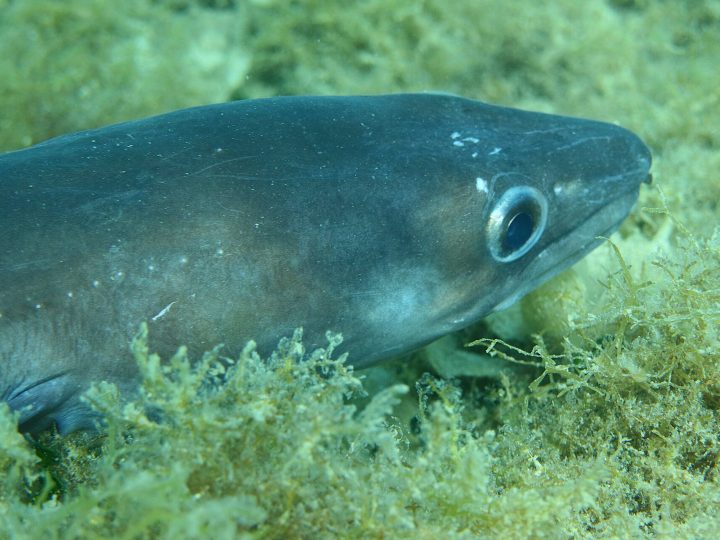
Conger eel
Crevices, boulders and wrecks, from 10 m
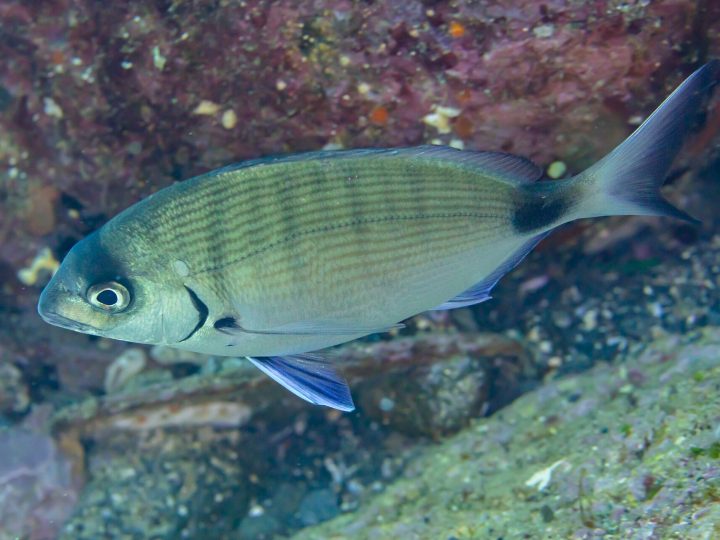
White seabream
Rocky ground, from the surface
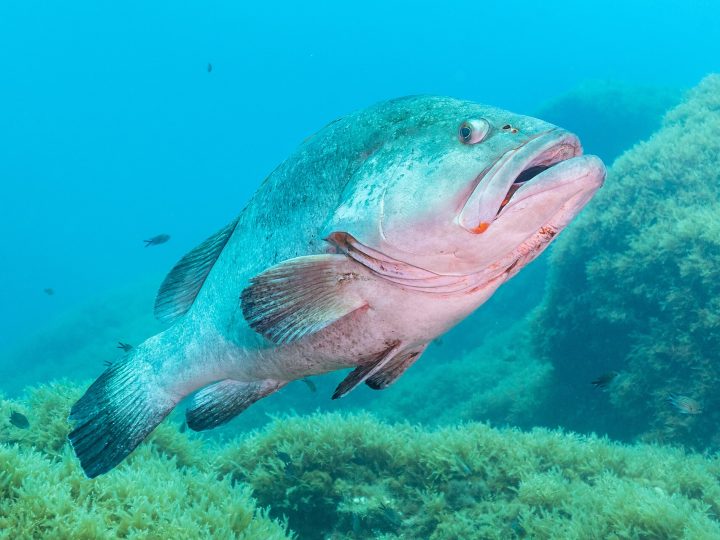
Dusky grouper
Rocky walls, from 15 m
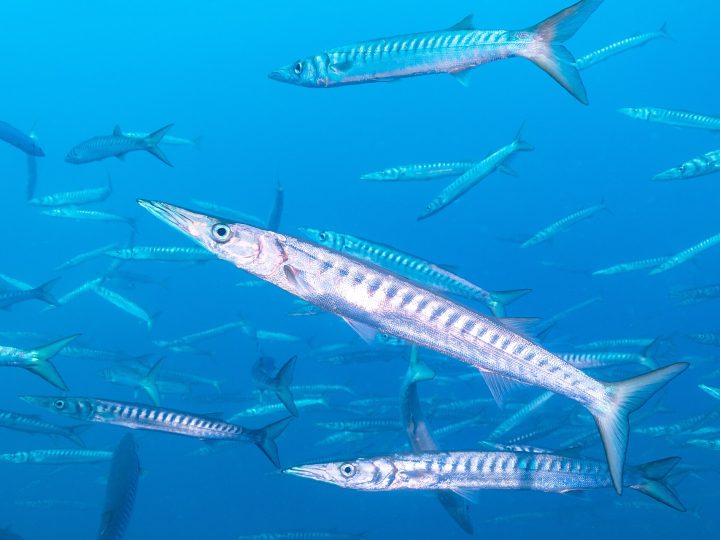
Barracuda
In open water, above the walls
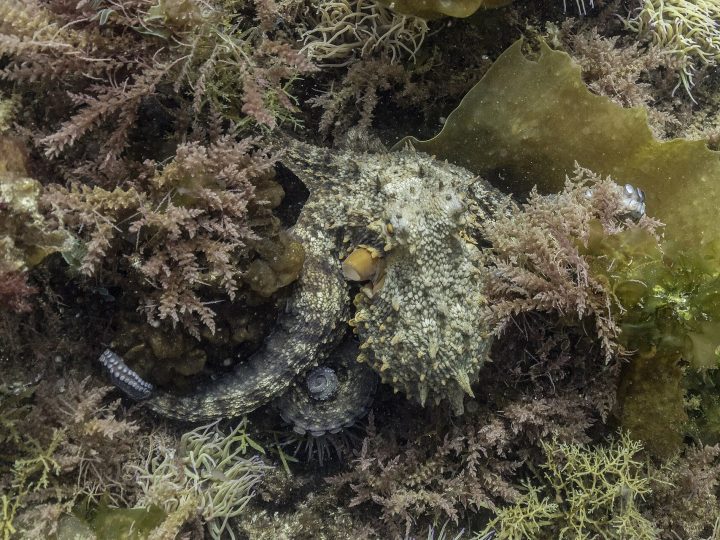
Common octopus
Rocky crevices, from 2 m
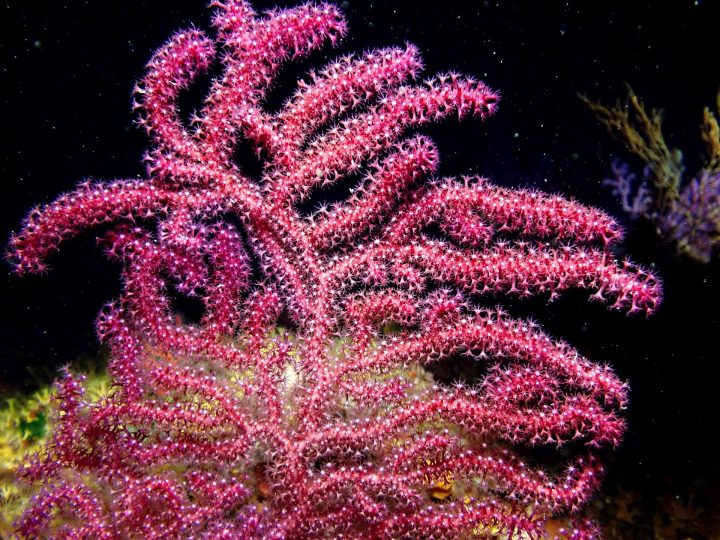
Red gorgonian
Walls, from 20 m
Photos: Holger Krisp · CC BY 3.0 · Wikimedia Commons ; Diego Delso · CC BY-SA 4.0 · Wikimedia Commons ; FredD · CC BY-SA 4.0 · Wikimedia Commons
The dive sites around Nice
From the bay of Villefranche-sur-Mer to the Mala cave, the site is chosen that morning according to the weather.

Cap de Nice
The closest area to the club: a run of walls that drop away fast, ten minutes from the…

Maeterlinck wall
A wall running out at right angles to the shore, beneath the villa that gives it its name:…
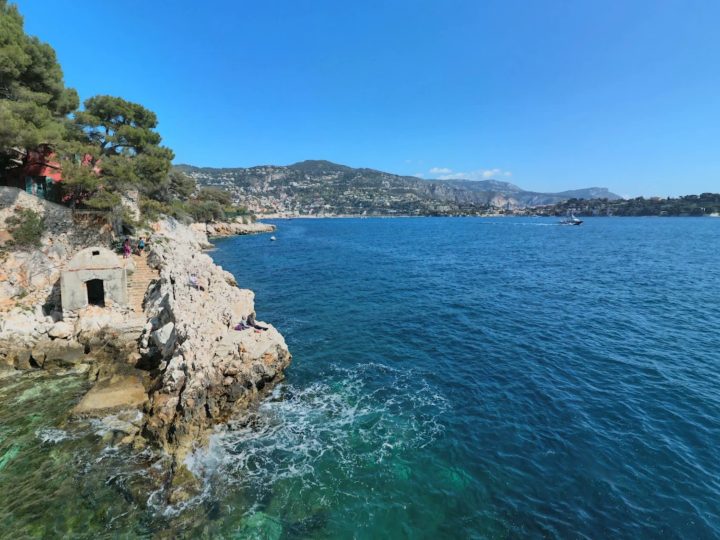
Bay of Villefranche — west side
The coral cave and the western points: the most complete dive in the bay, from the surface to…
Quai Lunel
The premises signed “Chango Diving”, in the port of Nice, next to Rent My Boat and the careening area.
- Address
- Quai Lunel
06300 Nice - Arrive
- 8.30am (30 min before departure)
Read before you come
Read up before your trip.

Your first try dive: what to expect
What actually happens, minute by minute, and the questions everyone has without daring to ask.
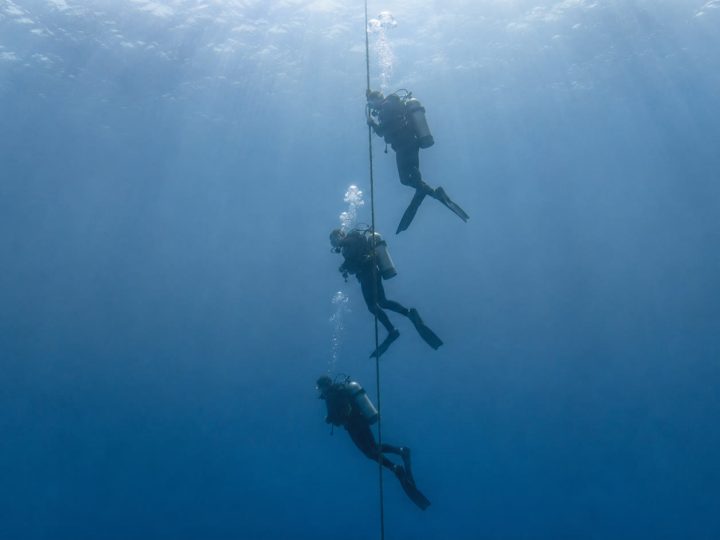
Open Water, Niveau 1, PADI, SSI: which certification to choose
Niveau 1 leads to sixty metres, Open Water to forty — and in France, the Code du sport does not recognise Open…
What diving in Nice really costs
From try dive to independence, what you actually pay — licence, medical certificate, certification card, equipment hire, and the point at which…
Two courses
The price depends on what you need. Each option spells out exactly what it includes.
Pick your time slot
Pick the date that suits you. A question before booking? Message us on WhatsApp, we reply fast.
Buying it as a gift?
Get a feel for it
Life on board, the Mediterranean, first breaths underwater and moments shared.


