
Conger eel
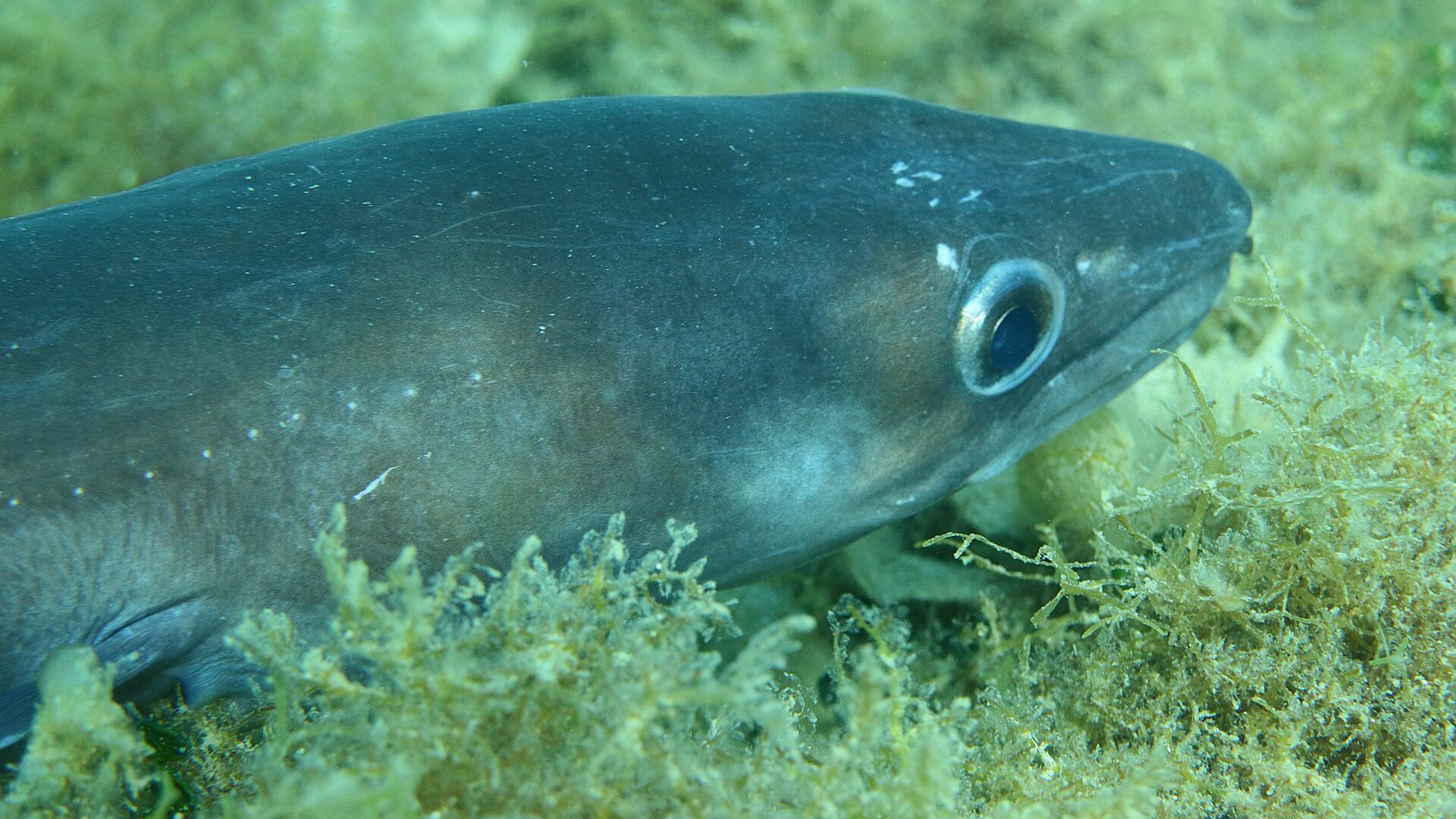
Long, grey and nocturnal, it takes the holes the moray does not. Usually just a head showing, nothing else.
- Scientific name
- Conger conger
- Size
- up to 2 m
- Where to see it
- Crevices, boulders and wrecks, from 10 m
- Season
- All year
The conger shares the crevices with the moray and is easy to tell apart: it is a uniform grey with no pattern, with a dorsal fin running the length of its back and a less tapered jaw.
It is nocturnal. By day you generally see only a head out of a hole, motionless, following the beam of your torch. It shows itself most on wrecks — the hull of the Toulonnais, at Monaco, shelters several.
Worth knowing: it can reach two metres and over thirty kilos. It is entirely harmless as long as you keep your hand out of its hole — the same rule as for the moray.
Trips where you can see it

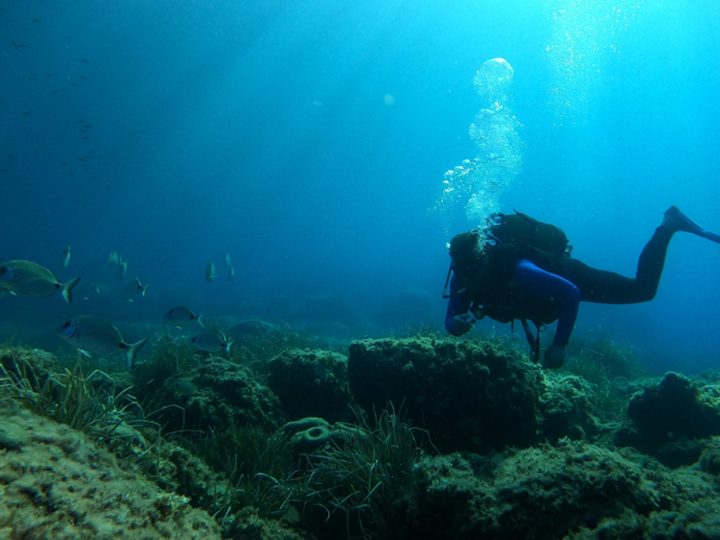
Try scuba diving, 20 min
Twenty minutes underwater, guided from start to finish, with no experience needed.
Two-dive introduction
Two 30-minute dives between 0 and 6 metres to learn a diver’s first skills, with the SSI Basic Diver card…

Scuba Diver SSI
The halfway certification: diving to 12 metres alongside a professional. It can be topped up later to become an Open…
What you can see underwater
Marine life varies with the season, the weather and the site chosen that morning. Here is what the Mediterranean off Nice most often has in store.
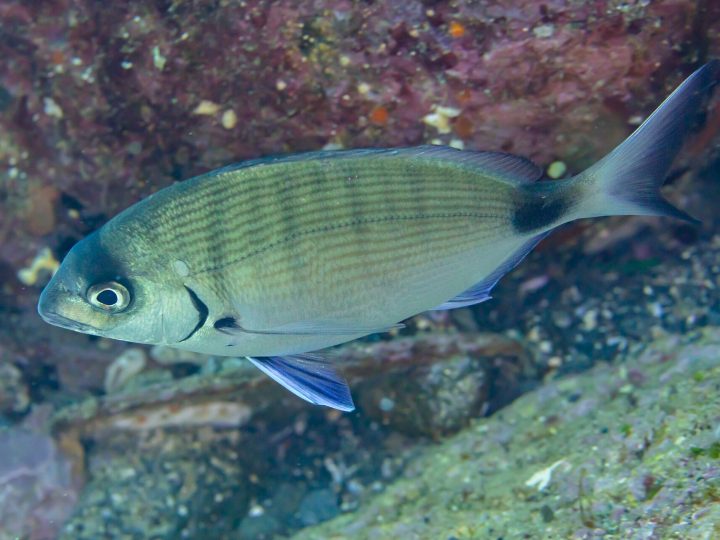
White seabream
Rocky ground, from the surface
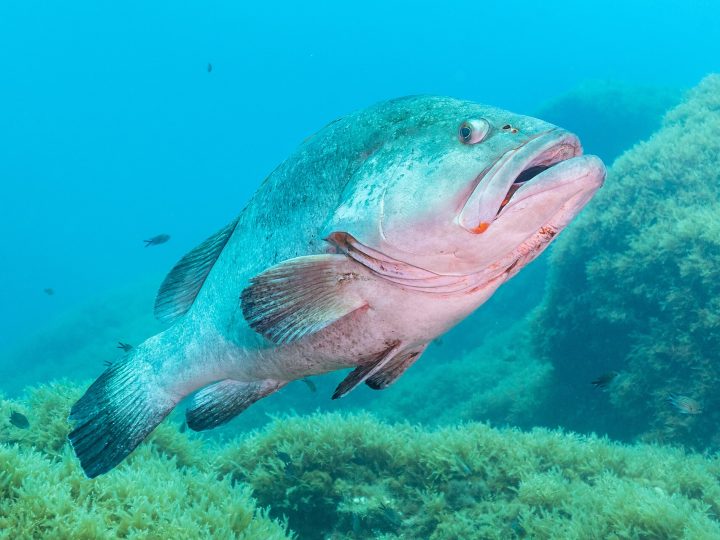
Dusky grouper
Rocky walls, from 15 m

Barracuda
In open water, above the walls
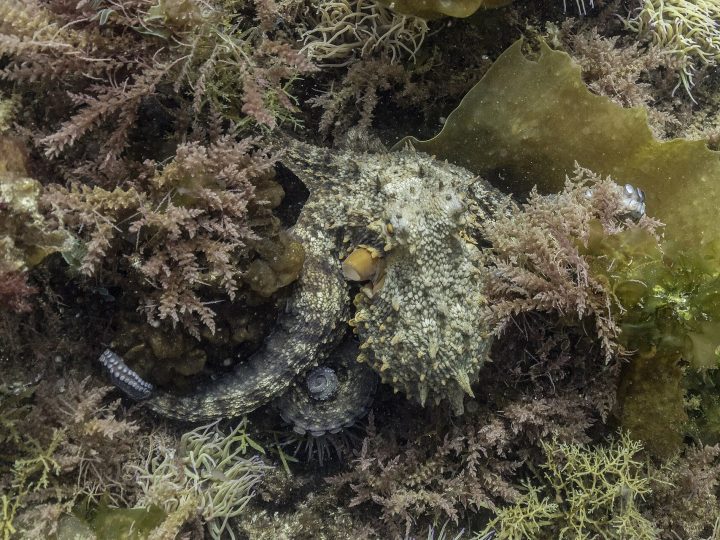
Common octopus
Rocky crevices, from 2 m
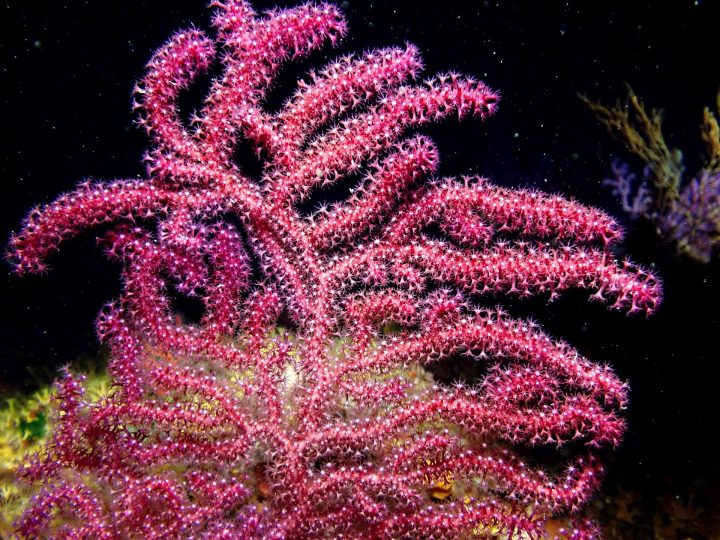
Red gorgonian
Walls, from 20 m
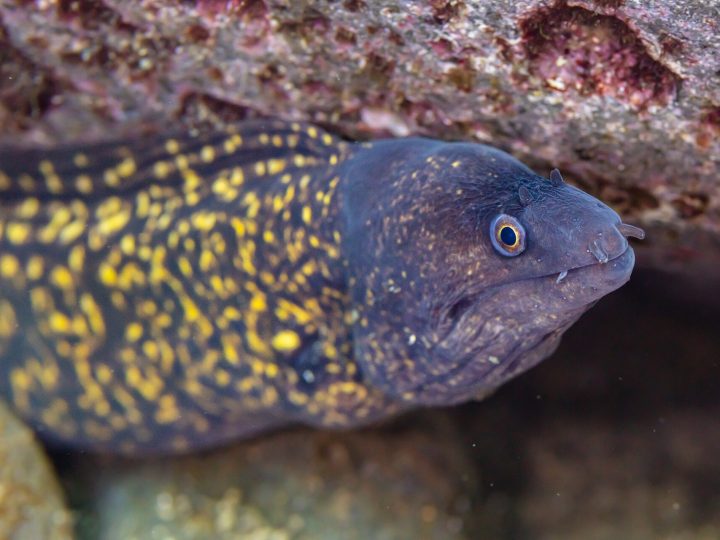
Mediterranean moray
Crevices and boulders, from 5 m
Photos: Diego Delso · CC BY-SA 4.0 · Wikimedia Commons ; FredD · CC BY-SA 4.0 · Wikimedia Commons


