
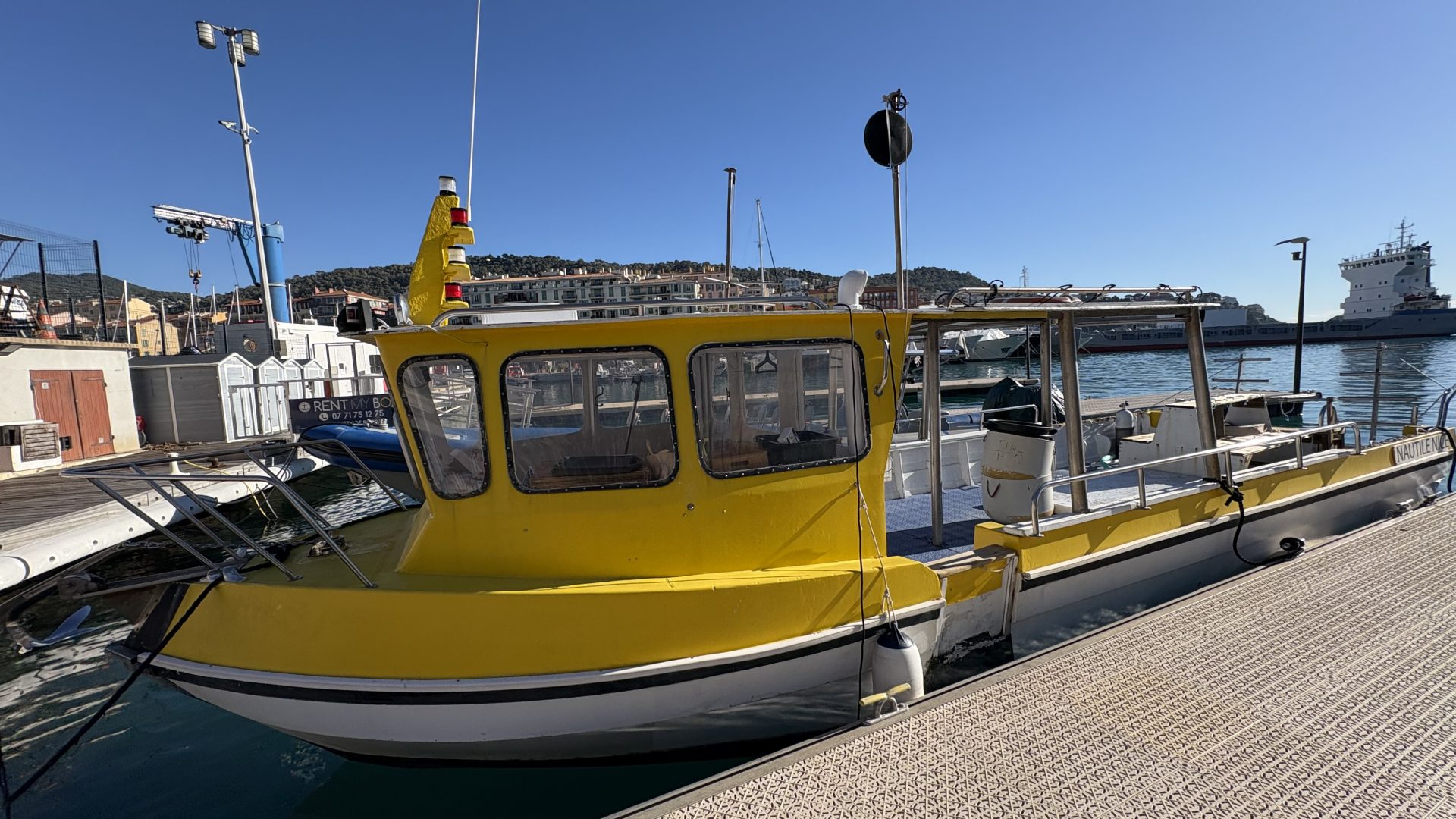
Carrying passengers by boat: NUC, BACPN, Capitaine 200 and professional training
Boat trips, rental skipper, dive boat: as soon as passengers pay, you need an NUC-approved boat and a professional title. A guide to the training.
On the Côte d’Azur, sea jobs are hiring: boat trips, dive boats, shuttles, skippers for rentals, yacht crews. Many applicants already hold the boat licence and wonder whether it is enough to take clients out. The answer is no: the leisure licence is a leisure qualification. As soon as passengers pay, it is a professional activity, with its own rules for the boat and for whoever drives it.
Two conditions: the boat and the skipper
Carrying paying passengers in France requires both:
- a boat approved for that use, recognised as a commercial-use vessel (NUC, navire à utilisation commerciale);
- a professional title for whoever commands it, with seafarer status.
The French Ministry of the Sea is clear: carrying paying passengers without a command certificate is a serious offence.
The boat: the commercial-use vessel (NUC)
A pleasure boat used for paid tourist or sports trips must be recognised as an NUC. The owner applies, a ship safety centre inspects the boat and issues a navigation permit. Up to 24 metres, the technical rules are those of Division 241:
- motorboat: 12 passengers at most;
- sailing boat: up to 30 passengers;
- the exact number is set at approval, depending on the boat and its equipment.
Beyond 24 metres, Division 242 applies, the one for professional yachts.
The skipper: the professional titles
All the titles below share the same basics: a medical fitness certificate from a seafarers’ doctor, the basic safety training certificate (CFBS, the STCW safety training required on board), registration as a seafarer, and revalidation every five years. They are prepared at training centres approved by the Ministry of the Sea or at maritime vocational schools.
BRACPN: no passengers, close to base
The restricted small-craft certificate lets you drive a motorboat under 12 metres, within 2 miles of its departure point, without carrying passengers. It is the title for technical shuttles, assistance at sea and harbour work.
BACPN: the title for boat trips
The small-craft certificate is the most sought-after to get started. It lets you command a motorboat under 12 metres, with 12 passengers at most, within 6 miles of the departure point. On the Côte d’Azur, the Mediterranean maritime directorate (DIRM) states that it covers engines up to 250 kW of propulsion power. It covers most coastal activities: boat trips, fishing outings, dive boats, beach shuttles.
There is a sailing version, the BACPN voile: sailing boats under 12 metres, in daylight, within 6 miles of a shelter, 12 passengers at most.
Capitaine 200: going further, with bigger boats
The Capitaine 200 is the benchmark certificate for small professional craft. It lets you command vessels under 200 gross tonnage, in commercial service up to 20 miles from the coast, with modules for fishing, yachts or sail that extend its scope. It is obtained after modular training and, to be issued, requires you to be 20 and to have professional sea time, around a year. It is the title held by our instructor, Marick, founder of Chango Sea.
For larger vessels, merchant navy certificates take over, with longer training.
Which title for which project?
| Your project | The title to aim for |
|---|---|
| Driving a service boat, without clients, near the harbour | BRACPN |
| Boat trips, dive boat, shuttles with 12 passengers at most, near the coast | BACPN |
| Skippering a day-charter sailing boat | BACPN voile |
| Commanding a bigger boat, or sailing further | Capitaine 200 |
These are guidelines, not the legal texts: before you start, check the exact scope with the DIRM Méditerranée in Marseille or with an approved training centre.
Rental with a skipper: a common case
Renting a boat “with a skipper” is no formality: as soon as the skipper is paid to take clients out, the boat must be an NUC and the skipper must hold a professional title. A friend with a coastal licence who drives for free, on the other hand, remains within leisure boating.
Funding your training
The professional titles are listed in the France Compétences register, which generally means they can be funded through the personal training account (CPF) or by France Travail for jobseekers. Check with the training centre you choose.
The first step: the coastal licence
The coastal licence is not required for these titles, but it is the best way to discover driving at sea before you commit: buoyage, rules of the road, weather, manoeuvres. The Chango Sea boat school, on the Port of Nice, prepares the coastal licence. To compare the leisure licences, read the different boat licences.
We teach the boat licence
Coastal, offshore, radio certificate: theory at the Port of Nice, practice at sea from Villefranche-sur-Mer, until you pass.
Also worth reading

Boat licence in Villefranche-sur-Mer: practice in the bay
Coastal licence practice in one of the finest bays in the Mediterranean: why it is such a good place to learn, how…
Large craft inland waters extension: driving a boat over 20 metres
Barge, houseboat, large river craft: from 20 metres, the inland licence is no longer enough. Conditions, training and paperwork for the large…
Inland waters boat licence: what it allows and how to get it
Rivers, canals, waterways: what the French inland waters licence allows, how the training works, what it costs, and the shortcut for coastal…


