

Inland waters boat licence: what it allows and how to get it
Rivers, canals, waterways: what the French inland waters licence allows, how the training works, what it costs, and the shortcut for coastal licence holders.
The coastal licence opens up the sea, but not the rivers. To drive a motorboat on a canal or a river in France, you need another option of the leisure licence: the inland waters option, often called the river licence. Here is what it allows, how it works, and why it is much easier to get if you already hold the coastal licence.
What the inland waters licence allows
It is required to drive, on inland waters, a boat whose engine exceeds 6 hp (4.5 kW) and which is less than 20 metres long. This also applies to a sailing boat with an engine over 6 hp, and to a jet ski on an inland stretch of water.
- Where: rivers and canals, from the Canal du Midi to the Rhône.
- Not at sea: the inland waters option gives no rights beyond the limit of maritime waters. At sea, you need the coastal licence.
- Over 20 metres: you also need the large craft inland waters extension.
On some lakes and closed stretches of water, the coastal licence is also accepted: check the local rules before you go.
What about a holiday barge without a licence?
This is the exception many people know: cabin boats rented for a river cruise can be driven without a licence. The rental company gives you a handover and issues a temporary pleasure card, valid for that boat and the rental period. As soon as you want to drive your own boat, or one outside that scheme, the inland waters licence is required again.
How to get it
The process mirrors the coastal licence almost exactly.
- Age: 16 or over.
- Theory: at least 5 hours of teaching at an approved school, then a theory exam on a tablet at an exam centre: 40 questions, 5 mistakes at most. The result stays valid for 18 months.
- Practice: at least 3.5 hours of training, including 2 hours at the helm. It is not an exam: the instructor signs off your skills in a logbook.
- Cost: €30 exam registration and a €78 tax stamp, so €108 of State fees, plus the course itself, priced freely by each school.
The shortcut if you hold the coastal licence
The practical training is the same for the coastal and inland options. If you already hold the coastal licence, you do not need to repeat any practice: you only have to pass the inland waters theory exam, which can be taken as an independent candidate, and the fees are lower than for a first licence.
For anyone living on the Côte d’Azur, it is often the smartest route: take the coastal licence, which you use all summer at sea, then add the inland option the day a canal cruise comes up.
In Nice, start with the sea
The Chango Sea boat school, on the Port of Nice, prepares the coastal licence. The practice you have signed off there is the one the inland licence requires too: all you will have left is the inland waters theory. To compare every option, read the different boat licences.
We teach the boat licence
Coastal, offshore, radio certificate: theory at the Port of Nice, practice at sea from Villefranche-sur-Mer, until you pass.
Also worth reading

Boat licence in Villefranche-sur-Mer: practice in the bay
Coastal licence practice in one of the finest bays in the Mediterranean: why it is such a good place to learn, how…

Carrying passengers by boat: NUC, BACPN, Capitaine 200 and professional training
Boat trips, rental skipper, dive boat: as soon as passengers pay, you need an NUC-approved boat and a professional title. A guide…
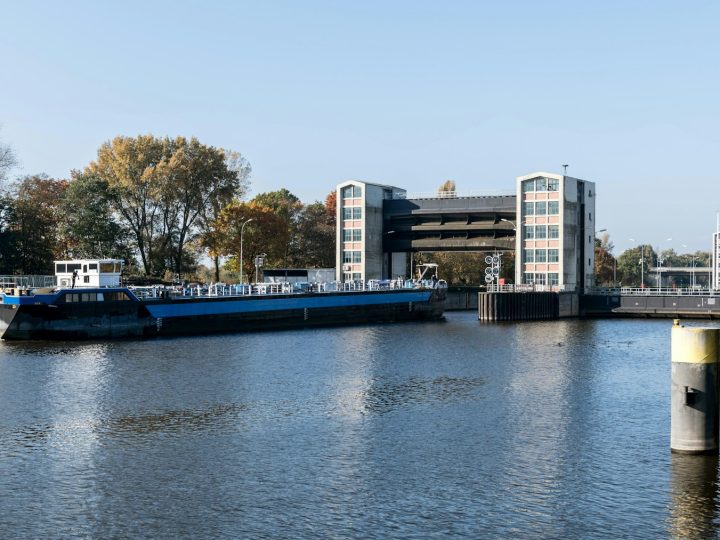
Large craft inland waters extension: driving a boat over 20 metres
Barge, houseboat, large river craft: from 20 metres, the inland licence is no longer enough. Conditions, training and paperwork for the large…


